
Learn
Understand yourself through psychology
Articles on IQ, EQ and the IEQ model, written plainly and backed by sources.
Featured·IQIQ Percentiles Explained: What Does an IQ of 124 Mean?An IQ of 124 is higher than about 94.5% of people your age. Learn how the normal distribution, z-scores and percentile ranks work so you can read any IQ score, with a full conversion chart.5 min readRead

IQ· 6 min readAre Online IQ and EQ Tests Accurate? How to Read Your ResultsOnline IQ and EQ tests are useful for self-discovery but have limits: measurement error, retest effects and self-report bias. Results are not a diagnosis.

IEQ· 8 min readBest Careers for Your Personality: Job Ideas for All 16 IEQ TypesPersonality and interests help you narrow down which careers to explore, but they can't decide for you. A summary of the research on person–job fit, plus career ideas for each of the 16 IEQ types.

IQ· 6 min readCan You Increase Your IQ? Fluid vs. Crystallized Intelligence and the Flynn EffectIQ isn't completely fixed: education can raise scores, and average scores have risen across generations. But many "brain training" methods lack solid evidence.

IEQ· 8 min readFree Career Test: What to Measure and How to Use Your ResultsA useful career test looks at three things: cognitive abilities, emotional abilities, and interests and personality. What each type measures, how to choose an online career test, how to read your results, the limits to keep in mind and a 3-step path on IQEQ.

EQ· 7 min readHow to Control Your Emotions When You're Angry or StressedWhen anger or stress spikes, calming your body, naming the feeling and reframing the situation work far better than venting. This guide covers research-backed techniques and the signs it's time to get professional help.

EQ· 6 min readHow to Improve Emotional Intelligence: 7 Daily HabitsEmotional intelligence can be trained. These 7 daily habits, grounded in psychology research, help you understand and regulate your emotions better.
PARENTS· 5 min readHow to Praise Your Child: Encouragement That Builds Confidence and GritTelling your child they are smart or clever is a way of showing love. Adding praise for how they did it helps them feel confident and keep going when things get hard. Specific phrases to use every day.

IEQ· 8 min readIEQ vs. MBTI vs. DISC: How These Personality Tests DifferMBTI sorts psychological preferences, DISC describes behavioral style, and IEQ combines cognitive and emotional abilities. A comparison of each model's origins, measurement, stability and limits.

IEQ· 8 min readIntrovert vs. Extrovert: What's the Difference (and Are You an Ambivert)?Introversion and extroversion are two ends of a continuous personality dimension, not two separate kinds of people. Learn what they mean, how they differ from shyness, and how the IEQ Energy axis works.
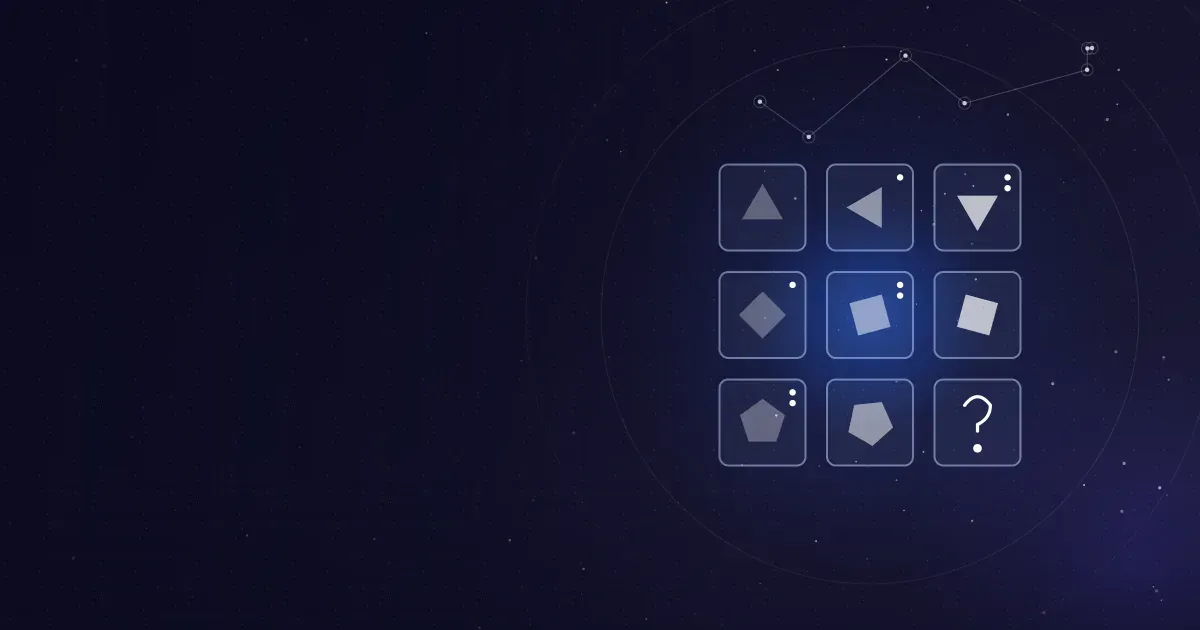
IQ· 8 min readIQ Test Sample Questions With Answers: 5 Common TypesEight original IQ practice questions covering 5 familiar types (patterns, logical reasoning, verbal, numerical and spatial), with answers, step-by-step explanations and tips for spotting how each type works.

IQ· 8 min readIQ Tests for Jobs: Question Types and How to PreparePre-employment cognitive ability tests usually cover numerical, verbal, logical and spatial questions. Learn why employers use them, how to prepare sensibly, and the limits of these tests.

IQ· 6 min readIQ vs. EQ: How They Differ and Which Matters MoreIs EQ more important than IQ? Research shows the two are only moderately related and complement each other. Here is the evidence from both sides.

IEQ· 10 min readPopular Personality Tests: MBTI, Big Five, DISC, Enneagram, Holland — Which Should You Take?Each well-known test answers a different question: what you prefer, how you behave, which careers interest you or where your strengths lie. What each test measures, who it suits and how to choose by age and goal.

EQ· 7 min readSigns of High and Low EQ: Recognizing Emotional Intelligence in Everyday BehaviorPeople with high emotional intelligence can usually name their feelings, stay calm before reacting and listen well. This article lists the signs across 5 competencies, how to observe yourself, and what not to confuse them with.

WELLBEING· 6 min readStress, Anxiety and Depression: How Are They Different?Three states that are easy to mix up but differ in their causes, how they feel and how long they last. Knowing the difference helps you decide when self-care is enough and when to see a professional.

IQ· 6 min readThe History of IQ Testing: From Binet to TodayFrom the Binet–Simon scale of 1905 to the Wechsler tests and the Flynn effect: more than a century of trying to measure intelligence, with real achievements and hard lessons.

EQ· 7 min readWhat Is a Good EQ Score? How to Read Emotional Intelligence ScoresEQ has no single universal scale like IQ. This article explains how emotional intelligence tests convert scores, which ranges count as high, and how to read each competency score correctly.
IQ· 8 min readWhat Is a High IQ? IQ Score Ranges ExplainedOn a scale with an average of 100, scores of 90–109 are average and 120 or above is considered high. See the Wechsler classification chart, how to read a score as a range, and the limits of online tests.

EQ· 6 min readWhat Is EQ? Emotional Intelligence ExplainedEQ (emotional intelligence) is the ability to recognize, understand and manage your own emotions and those of others. Learn the main models and how EQ is measured.

IQ· 6 min readWhat Is IQ? What Your Intelligence Quotient Really MeasuresIQ is a standardized score that shows how your performance on an intelligence test compares with people your age. Learn what IQ measures, what it misses, and how to read the number.
IQ· 8 min readWhat Is the Average IQ Score? Understanding the NumbersThe average IQ is 100 by definition of the scale. This article explains why the 100 benchmark has to be reset over time, what average IQ by age means, and why tables of IQ by country are so controversial.
10 abilities
● 5 IQ abilities● 5 EQ abilities
IEQ model10 abilities, 4 axes, 16 typesHow we measure, convert scores and assign types, with limitations and sources.Explore the model