What this ability is
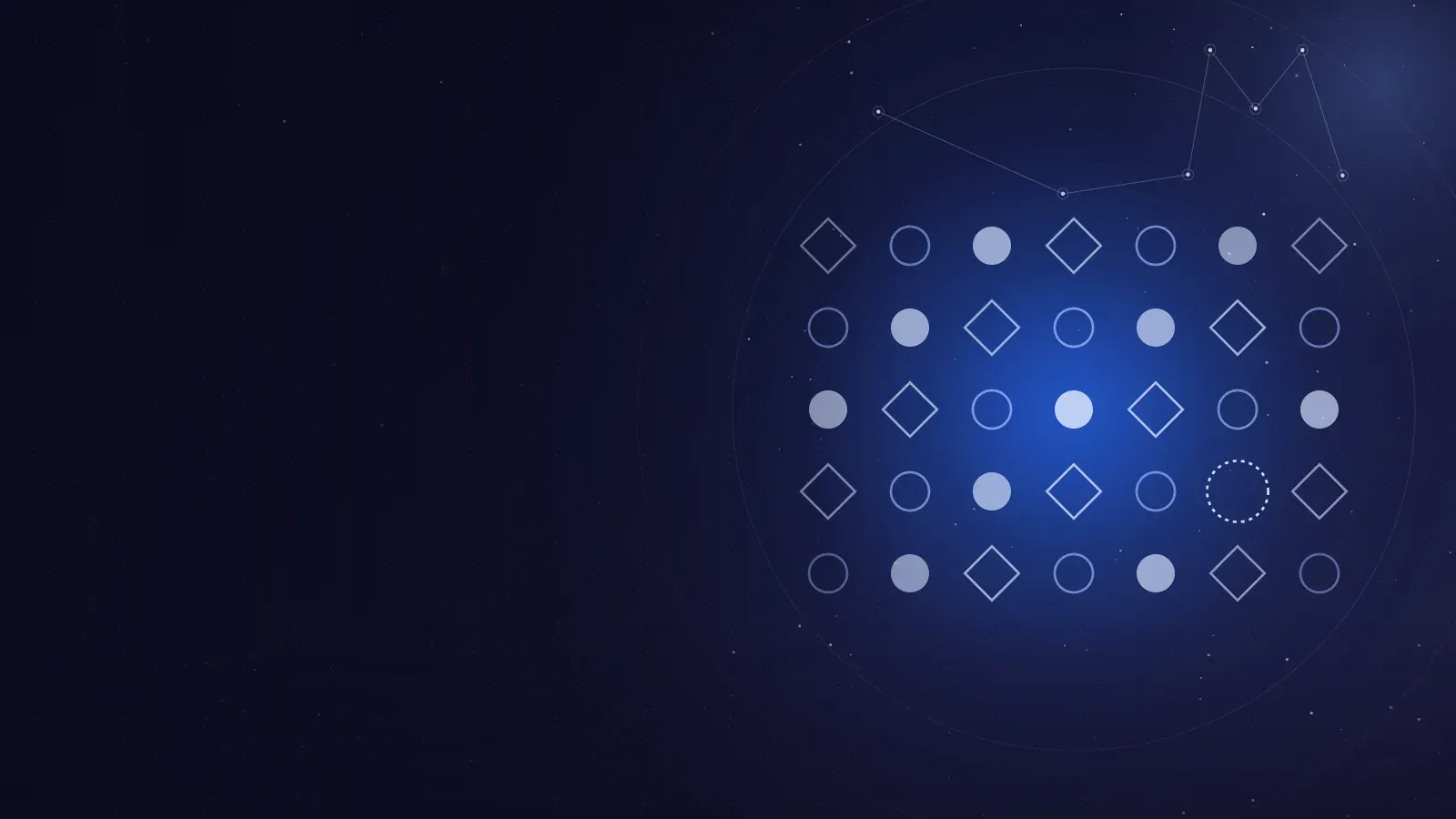
Pattern recognition is the ability to look at a set of seemingly unrelated data — shapes, numbers, symbols, events — and discover the rule that governs them. When you see a sequence where a square rotates 45 degrees and gains a black dot at every step, and you can predict the next shape, you are using this ability.
In the CHC model, it is the central part of fluid intelligence (Gf), specifically inductive reasoning: moving from specific cases to a general rule. Crucially, it depends little on learned knowledge, because the problems are usually completely new to the test-taker.
Why it matters
The world runs on patterns, and people who spot them early have an advantage. A student who sees the common structure of a problem type can solve its variations too. A data analyst notices a trend before it shows clearly on a chart. An engineer realizes a bug always appears under the same condition. Even in everyday communication, noticing that “this coworker tends to get stressed at the end of every month” is a form of pattern recognition.
This ability is especially useful when you face situations with no instructions yet: new technology, a new job, a new environment. It helps you build your own “map” instead of waiting for someone to draw it for you.
How the test measures it
The PAT items in the project's IQ test are mainly:
- Shape matrices: a 3×3 grid with one missing cell; you pick the right shape based on rules across rows and columns (count, rotation, color, adding/subtracting shapes).
- Transformation sequences: a series of shapes that change according to one or two rules at the same time.
- Odd one out: among five shapes, one doesn't follow the common rule.
Difficulty increases by layering several rules on top of each other. Strong performers usually test hypotheses systematically instead of guessing by feel. Scores are standardized against a reference group; an online test provides only an estimate, not a diagnosis.
Signs in everyday life
People with strong pattern recognition tend to pick up the “rules” of a new game or app very quickly, notice things that repeat in cycles, enjoy visual puzzles and codes, and often anticipate how things will unfold from small cues. They're the ones saying “this looks just like last time.”
If this ability is still developing, you may need more examples before you see what they have in common. That's completely normal and improves with guided practice.
How to build it
Fluid intelligence is hard to “teach” directly, but problem-solving strategies can be trained. When you face a shape matrix, separate each attribute (shape, count, position, color) and examine them one at a time. Creating puzzles for others also helps you understand how patterns are built. Games like Set or Mastermind force you to keep forming and testing hypotheses. You can also try logging one of your own habits for two weeks and looking for patterns — a skill that transfers very well to real work.
How it connects to other abilities
Pattern recognition goes hand in hand with Spatial thinking (SPA), since many patterns involve rotating, flipping or moving shapes; in the IEQ model, when PAT and SPA are both strong, the Thinking axis leans toward Intuitive (I). It complements Logical reasoning (LOG): PAT helps you form hypotheses, LOG helps you verify them. On the EQ side, recognizing your own recurring emotional patterns is part of Self-awareness (SAW).